Food Manufacturing Business Guide
Discover the ultimate guide to starting and operating a successful food manufacturing business in Australia….
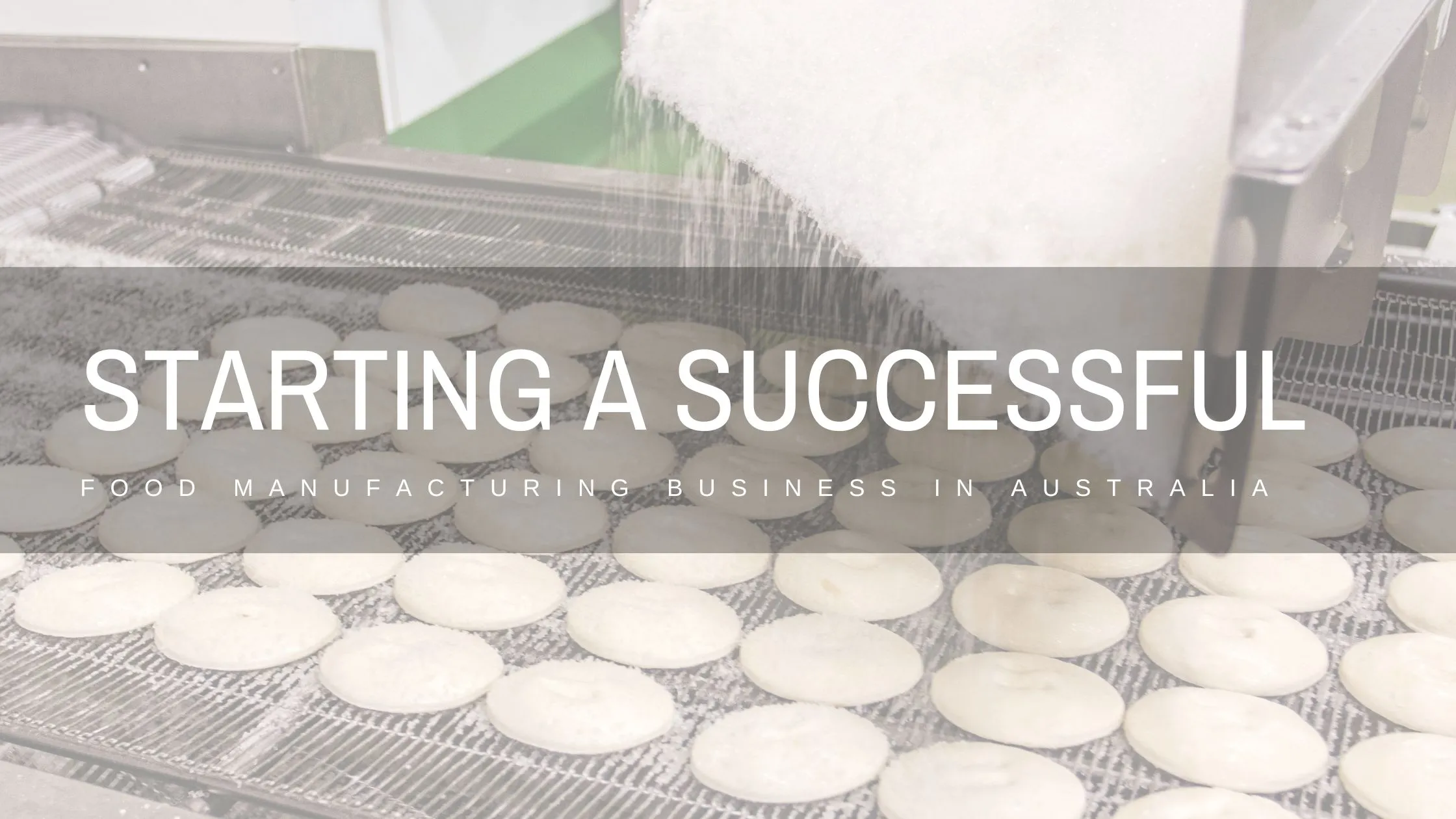
Discover the ultimate guide to starting and operating a successful food manufacturing business in Australia. Get all the information you need to become the next success story.
Food Manufacturing Business Guide
Thinking of starting a food and beverage manufacturing business in Australia or already operating one. This user friendly food manufacturing business guide dives deep into the requirements for a successful food manufacturing business in Australia. Separating the wheat from the chaff by reading through each section and compiling all the required information your business is bound to become one of the next success stories.
Introduction
What is Food Manufacturing?
Food manufacturing is the process of taking ingredients and turning them into food products for people to consume.
Video Starting a successful food manufacturing business in Australia using Used Food Manufacturing Equipment
Brief overview of the food manufacturing industry in Australia
Brief overview of the food manufacturing industry in Australia
The food and beverage manufacturing industry play a vital role in the Australian economy.
Economic Contribution
Economic Contribution: Formulating Australia’s largest manufacturing sector, Food and Beverage manufacturing accounts for over 30% of the total manufacturing output which equates to around $133 billion AUD dollars.
Employment
Employment: This sector provides a large number of jobs, employing approximately 275,000 people within the work force and also provides job opportunities and employment to people located in regional areas of Australia.
Challenges and Potential Threats to The Industry
Challenges and Potential Threats to the Industry: Like all industries, the food and beverage industry face potential threats and challenges.
The most eminent challenges would have to be around huge increases in the cost of rent, staff, produce, raw materials and electric.
All of which could lead to:
- An increase in outsourcing of food manufacturing to overseas contract manufacturers as opposed to Australian manufacturing.
- An increase in imported food products and produce from overseas. Although many Australian consumers generally always tend to be in favour of purchasing Australian grown and made, particularly when it comes to food based products.
Future Opportunities
Future Opportunities: The Australian Food and Grocery Council (AFGC)’s vision is for the Australian food and beverage manufacturing sector to double by 2030, which would result in the sector growing to $250 billion AUD.
There is still a huge untapped market with many opportunities for growth and expansion for Australian producers and growers to export Australian grown and Australian made food and beverages to overseas markets.
Consumer trends and changing consumer demands are also leading to a larger number of Australian consumers not just opting for Australian grown and made food and beverages, many are now wanting produce and food products that are sourced and made as locally as possible.
Due to the environmental impact food trends such as paddock to plate and local food movements are continually expanding and growing in popularity.
Top Food Manufacturers in Australia
Top food manufacturers in Australia For detailed information and to read more about Australia’s Largest Food manufacturer – Top 100.
Importance and potential Benefits of starting a food manufacturing business in Australia
Starting a food manufacturing business in Australia can be very rewarding, though it also has a very important part to play in the Australian economy.
Some of the key contributing components an Australian food manufacturer manufacturer can provide from an economic point of view can be summarised as follows:
Economic Contribution
Economic Contribution – The Australian food manufacturing sector is the largest manufacturing sector in Australia and as a result contributes significantly to the Australian economy
Employment
Employment – This sector provides employment to a large number of people in the country.
Jobs provided by this sector are not just restricted to the major cities they are spread across the country including to regional areas.
National Resilience
National Resilience – Food security is of paramount importance in any day and age though with global uncertainty, unpredictable weather conditions and unforeseen events.
It is of extreme importance to ensure a robust food manufacturing sector that is capable of providing reliable access to a sufficient quantity of affordable, nutritious food for the entire nation
Australia is very fortunate in that Australia is a food bowl and is capable of growing and producing an abundance of food without having to rely on any foreign countries.
Supporting the Local Economy
Supporting the Local Economy – Investing in local food manufacturing helps the growth and development of all areas across the country irrespective of where they are located be it in one of the major cities or in a remote location.
Helping to ensure smaller towns and regions are also able to flourish think of places like: Byron Bay NSW, Tweed Shire in NSW, Southern Highlands, NSW. Maleny QLD, Glass House Mountains and Atherton Tablelands in QLD. Yarra Valley and Gippsland in Victoria, The Eyre Peninsula, Barossa Valley and Port Lincoln in South Australia Margaret River in WA and many other areas across Australia.
Food Manufacturing Business Guide Market Research
What are the Different Sectors Within The Australian Food Industry
The different sectors within the Australian food industry are:
Agriculture and Fisheries (Production)
Agriculture and Fisheries (Production) producing food derived from plants and animals. Examples of these are avocado farms or pasture raised and pasture reared cattle farms.
Naturally the list of agriculture and fishery producers in Australia is very extensive as Australia grows and cultivates large amounts of produce right across all the states of Australia and also has a large number of animal ranchers, graziers and farms across the entire continent.
Food Processing and Food Manufacturing
Food processing and Food Manufacturing. Any food or beverage that goes through some form of processing prior to being sold to the consumer is known as processing. This can be as simple as a single ingredient such as Northern Queensland Vanilla bean pods that are grown and harvested and sold to the public or more complex forms of processing that have to go through more steps prior to being sold such as Australian made toasted and slowly roasted muesli using Australian grown ingredients. Processed, baked and packed all prior to being distributed and sold to customers across Australia.
Food Retail Including Distribution
Food Retail including Distribution: Includes all the places that Australian consumers can purchase processed food and beverages including large super market chains through to independent grocers such as IGS and spa’s through to growers and farmers markets markets and smaller stores and shops such as. Your local deli, butcher, baker or health food store.
Food Service and Catering
Food Service and Catering: This involves the preparation of food and service of food to customers and can include the hospitality sector for example canteens, restaurants and cafes.
Delivery Services
Delivery Services: including food delivery services such as Deliveroo and Uber Eats
Analysing Consumer Preferences And Trends
Analysing consumer preferences and trends to provide all the required information required for Starting a Successful Food Manufacturing Business in Australia.
How to Identify Your Target Market
How to go about identifying your target market:
Identifying your target market is crucial for the success of your business.
It helps a business to get to know their customers. To formulate customer personas:
Create Customer Persona’s
Create detailed customer persona’s:
- Who they are are, demographics (age, gender, income, education)
- Psychographics: lifestyle, interests, values.
- Communication Preferences: identify the best way to communicate with specific customers.
- How to market to them.
- Consumption habits: how they consume marketing material. The best / most suitable platforms to use to market to a specific customer base.
For the Success of any Business.....Identifying Your Target Market
Also Helps A Business To:
- Formulate the most appropriate pricing strategy for a specified target market.
- Identify where to sell your products and or set up a business. The best location.
- Helps determine where and how to market to specific customers.
- Goals and Challenges to help formulate products benefits and USP unique selling proposition.
A List To Help Identify Your Target Market
A list to help identify your target audience:
- What is your USP (unique selling proposition) of your product? What makes your product special or. unique compared to competitors products. What makes it better and why should a customer buy your product as opposed to one of your competitors products?
Define how your product can solve a problem or meet a need. - Market research: Conduct surveys, interviews, set up small focus groups to gather data on potential customers. Read and review market trends. Also look online for market research to assess market trends, opportunities and demographics information.
- Target Market Segmentation: Group your target market together into smaller groups. Look for commonalities and segment them using these commonalities such as age, gender, location, interests and buying behaviour.
- Conduct Competitor Research – look for all the information you can on all your main competitors. See if they have a website and use social media. If they do read through their website. Look at the social media posts.
What do they write about. What do they post on social media. Which platforms ode they use. How often do they post? Look to see how they are targeting. What is the one of voice that they are using. How do they talk to customers. Is it in using a fun tone of voice or more professional. Also look to see what they are doing well. What they are not doing so well. Look to see where there are gaps.
Test Assumptions
Continuously test your assumptions measure your results and validate your research and be prepared to refine your strategy based upon what you learn and discover along the way.
Use Analytics: use web and social media analytics and insights to track who is engaging with your content and buying your products.
These steps can help you hone in on your target market and tailor your marketing efforts, giving you the most bang for your buck. Helping to ensure you reach your customers in the most effective way.
Assessing The Competition
Assessing the competition:
The best way to assess the competition is by doing online research and if they have / sell from a physical location that you are able to visit then to go to that location.
If competitors only sell online, then spend more time looking to find out everything you can about them online.
Main Areas To Address:
The main areas that you should look at are:
- Product – see about buying their products so that you can see what they taste like. If it is a product and not produce, then what ingredients do they use. What sort of packaging do they have.
- Price -What is their pricing strategy?
- Promotion – what channels are they using to market to customers. Do they use magazines, newspapers? Do they place ads on social media platforms? What about Google Adwords? Look at their brand identity: the colours they use. What is their communication strategy? Their tone of voice. The channels that they use to market and communicate with customers.
- Place – where do they sell to customers? Do they have a physical store or warehouse. Do they sell online?
- Customer – who do they sell to
- Competition – who re their competitors?
Do not do something just because your competitors are doing it unless you have conducted some research into the cost, benefits, effectiveness and whether or not it is something that will work for you and your business. Just because your competitors are doing something, does not necessarily mean that everything they are doing is working or that it will work for you.
Due to technology, you can now easily engage the services of online digital agencies to track and monitor your competitor’s marketing and advertising campaigns.
This can help determine their effectiveness and how you can go about setting up suitable advertising and marketing campaigns including ads and social media campaigns that will help you produce the best results for your business and product offering.
Business Planning
BUSINESS PLANNING
CRAFTING A COMPREHENSIVE BUSINESS PLAN:
There are several key components required for a business plan.  Below is an outline that can be used in order to create a detailed business plan. For your business.
Comprehensive Business Plan Outline
- Executive Summary
- Brief overview of your business
- Mission statement
- Highlights of the plan
- Summary of financial information
- Business Description
- Company history
- Business structure
- Market opportunity available if you are Starting a Successful Food Manufacturing Business in Australia.
- Vision and goals
- Market Analysis
- Industry overview
- Target market
- Competitive analysis
- Market needs and trends
- Organisation and Management
- Organisational structure
- Leadership team
- Roles and responsibilities
- Board of directors (if applicable)
- Products or Services
- Description of products or services
- Unique selling propositions (USPs)
- Product lifecycle
- Research and development
- Marketing and Sales Strategy
- Marketing plan
- Sales strategy
- Pricing model
- Advertising and promotions
- Distribution channels
- Funding Request
- Funding requirements
- Future funding plans
- Potential investors
- Financial Projections
- Revenue forecasts
- Profit and loss statement
- Cash flow statement
- Balance sheet
- Break-even analysis
- Appendix
- Resumes of key team members
- Legal documents
- Detailed market research data
- Product pictures or brochures
Food Manufacturing Business In Australia
This food manufacturing business guide provides an overview of the most important information required for a business plan.
Writing a detailed business plan is very important for the log term success of a business. As the saying goes, if you do not plan. You plan to fail.
This article only lists the main headings and categories for your plan. Whereby you can then insert all the required and relevant information.
If you need more detailed explanations about what specific information to include in any of the sections listed above, for your business plan, you will easily be able to find detailed explanations online.

Financial Planning And Securing Funding
FINANCIAL PLANNING AND SECURING FUNDING
A detailed section of your Business Plan is your Financial Plan. This section breaks down the main heading that should be addressed and included in your Business Plan – Financial Plan.
FINANCIAL PLANFinancial Plan
A financial plan is a very important component of your business plan and is not only important for the business owner though can also be used if you require a bank loan or credit or you are going to have investors or silent partners in your business.
Below is an outline for a well structured and detailed financial plan within your business plan:
- Introduction
- Overview of financial goals and objectives
- Key assumptions
- Revenue Model
- Sources of income
- Pricing strategy
- Sales forecast (monthly, quarterly, annually)
- Operating Budget
- Fixed costs (rent, salaries, utilities)
- Variable costs (raw materials, production costs)
- Contingency plans for unexpected expenses
- Cash Flow Statement
- Cash inflows and outflows
- Monthly cash flow projections
- Strategies for managing cash flow
- Break-even Analysis
- Calculation of break-even point
- Graphical representation (if applicable)
- Strategies to reach break-even
- Income Statement (Profit & Loss)
- Revenue projections
- Cost of goods sold (COGS)
- Gross profit margin
- Operating expense
- Net profit
- Balance Sheet
- Assets (current and non-current)
- Liabilities (short-term and long-term)
- Owner’s equity
- Financial Ratios and Metrics
- Profitability ratios (e.g., net profit margin, return on assets)
- Liquidity ratios (e.g., current ratio, quick ratio)
- Leverage ratios (e.g., debt-to-equity ratio)
Funding Requirements
- Funding Requirements
- Capital needed to start and run the business
- Funding sources (equity, loans, grants)
- Plan for using funds
- Appendix
- Detailed financial statements
- Additional financial data and charts
Summary
Having a clear, detailed financial plan is crucial for attracting investors and keeping your business on track.
Check out our Youtube Video Starting a Successful Food Manufacturing Business in Australia.
Setting up a Bakery and looking for tips, guides and information – check out our Bakery Guide 101, Bakery Financial Plan, Bakery Marketing Plan and Bakery Business Plan.
Part One of the Food Manufacturing Business Guide looked at: Food Manufacturing in Australia, including the importance and benefits, Market Research, Sectors, Consumer Preferences andTrends, Target Markets, Business Planning including comprehensive Business Plan Outline and Financial Planning and Securing Funding. and how to compile a comprehensive Financial Plan.
Check back for Part Two of the Food Manufacturing Business Guide.